The transition from centralized laboratory testing to on-site molecular analysis is fundamentally changing how we manage biological threats. In fields ranging from veterinary medicine to environmental biosafety, the ability to perform a rapid detection of pcr products without transporting samples across provinces or borders is no longer a luxury—it is a operational necessity.
Traditional Polymerase Chain Reaction (PCR) has long been the gold standard for nucleic acid amplification, yet its reliance on bulky thermocyclers and stable power grids created a "diagnostic gap" in field environments. This gap often resulted in delayed responses to zoonotic outbreaks or contaminated livestock shipments, where every hour of delay increases the risk of widespread transmission.
To address these constraints, the industry has shifted toward miniaturization and integrated detection systems. By combining portable amplification hardware with rapid fluorescence signaling, modern diagnostics now allow for a streamlined workflow that moves from sample collection to result in under an hour, fundamentally altering the timeline of pathogen containment.


For decades, the detection of pcr products required a sterile, climate-controlled laboratory. The process involved complex extraction, precise thermal cycling, and often labor-intensive gel electrophoresis to verify results. While accurate, this "hub-and-spoke" model created significant bottlenecks during urgent veterinary or customs inspections.
The emergence of the Mini PCR represents a pivot toward decentralized diagnostics. By integrating heating elements, optical sensors, and control interfaces into a device weighing only a few hundred grams, the "laboratory" is effectively brought to the sample. This eliminates the degradation risks associated with sample transport and provides immediate actionable data.
The primary challenge in portable molecular detection is maintaining thermal stability. PCR relies on precise temperature swings to denature DNA, anneal primers, and extend the sequence. In a handheld device, achieving a temperature range of 20℃ to 100℃ with a tight tolerance (such as ± 0.5℃) is critical to prevent non-specific amplification or failed reactions.
Beyond heating, the optical system must be capable of detecting low-concentration fluorescence signals. The use of FAM and SYBR channels allows for both specific probe-based detection and general double-stranded DNA quantification. The integration of a touch screen and Bluetooth communication ensures that the operator can monitor the amplification curve in real-time without needing an external computer.
Power management is the final technical hurdle. Portable units must operate on DC power (e.g., 9V 3A) via batteries or adapters to ensure functionality in remote livestock farms, customs checkpoints, or field ecology sites where mains power is unavailable. This enables a truly autonomous diagnostic workflow.
In the context of rapid detection, the Signal-to-Noise (S/N) ratio determines the lower limit of detection. When dealing with environmental samples or early-stage infections, the target DNA concentration may be extremely low. A high S/N ratio ensures that the fluorescent signal of the amplified product is clearly distinguishable from the background noise of the reagents and the device's optical sensors.
The accuracy of field-based molecular diagnostics depends less on the absolute strength of the signal and more on the precision of the signal-to-noise ratio to prevent false negatives in low-titer samples.
Achieving this requires high-quality optical filters and sensitive photodetectors. When a device can perform 8 detections simultaneously, the challenge scales; the system must maintain consistent S/N ratios across all channels to ensure that result A is comparable to result B, regardless of the sample position in the block.
Time-to-result is the most critical metric for on-site testing. Traditional lab PCR can take 24 to 48 hours when including transport and queuing. A portable system like the HF-8T reduces this to approximately 30 minutes for a single test. This acceleration is achieved through optimized thermal cycling and direct fluorescence readout, allowing for immediate quarantine decisions.
Furthermore, the capacity for multi-pathogen detection significantly increases the utility of a single device. By screening for 8 pathogens simultaneously—such as African Swine Fever and Foot and Mouth Disease in a single run—operators can maximize their throughput and reduce the cost per sample, making comprehensive monitoring economically viable for larger farms.
In pet hospitals and transportation hubs, the risk of zoonotic transmission (e.g., Rabies or Salmonella) requires immediate screening. A portable Mini PCR allows customs officers to verify the health status of animals at the point of entry, preventing the accidental introduction of pathogens into a new region. This "front-line" defense is far more effective than retroactive testing of imported livestock.
Similarly, in agricultural settings, detecting swine diseases like African Swine Fever early can save an entire facility. By using a device that can be carried directly into the barn, veterinarians can perform rapid tests on suspected animals, reducing the time between symptom onset and containment. This application extends to poultry (Influenza A) and ruminants (Tuberculosis), providing a versatile tool for comprehensive farm biosecurity.
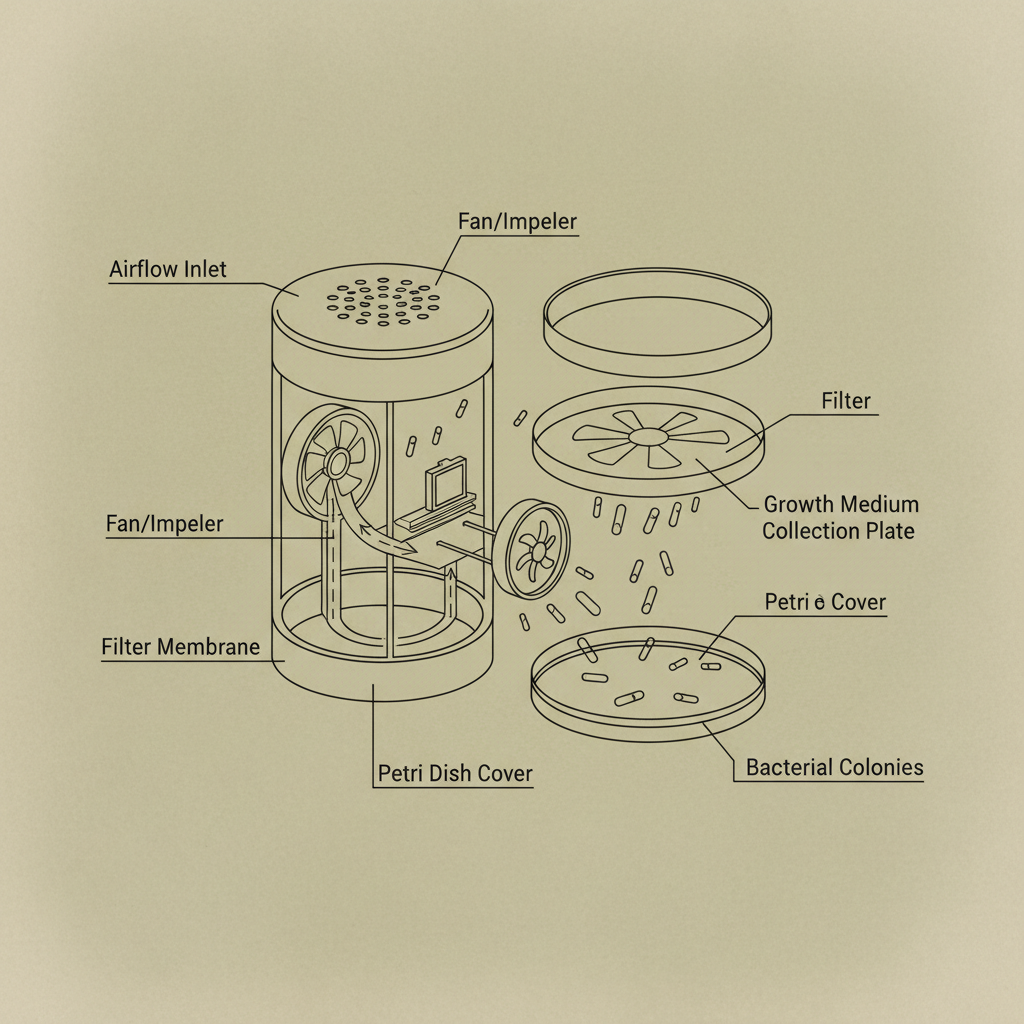
The industry is moving toward "fully integrated" systems where the bioaerosol sampler and the PCR detection device operate as a single ecosystem. Instead of manual sample transfer, future workflows aim to automate the extraction and amplification process, further reducing human error and the risk of cross-contamination during the detection of pcr products.
We are also seeing a shift toward isothermal amplification technologies integrated into Mini PCR hardware. While traditional cycling is effective, isothermal methods can further reduce power consumption and time. However, the current trend still favors the versatility of the Mini PCR for its ability to handle a wider array of validated diagnostic reagents.
Finally, data connectivity is becoming central. The integration of Bluetooth and cloud-based reporting allows field results to be instantly uploaded to a central epidemiological database. This enables government health agencies to map pathogen outbreaks in real-time, transforming individual tests into a global biosafety surveillance network.
When selecting a portable PCR instrument, users must weigh the trade-off between portability and throughput. A device weighing 307g is ideal for a customs officer on foot, but a larger, multi-channel system might be more appropriate for a third-party laboratory performing high-volume screening. The key is to align the device's specifications with the actual operational environment.
Another critical consideration is the reagent compatibility. A device is only as useful as the assays it can run. Professionals should ensure the hardware supports the specific fluorescence channels (like FAM/SYBR) required by their diagnostic targets, whether they are zoonotic diseases, swine pathogens, or poultry viruses.
Lastly, the ease of operation cannot be overlooked. In field settings, operators may not be PhD-level molecular biologists. A touch-screen interface and a simplified workflow that requires minimal professional training are essential for ensuring the reliability of the results and the safety of the process.
| Evaluation Factor | Central Lab PCR | Portable Mini PCR | Rapid Antigen Test |
|---|---|---|---|
| Sensitivity/Specificity | Very High | High | Moderate |
| Time-to-Result | 24-72 Hours | 30-60 Minutes | 15-30 Minutes |
| Operational Site | Controlled Lab | Field/POCT | Anywhere |
| Equipment Cost | High Investment | Moderate | Low |
| Quantification Ability | Precise (qPCR) | Semi-Quantitative | Qualitative Only |
| Sample Preparation | Complex/Automated | Simplified/Manual | Minimal |
A Mini PCR is a miniaturized version of a traditional thermocycler, designed for portability and point-of-care testing (POCT). While it retains the core ability to amplify DNA via thermal cycling, it differs in size (often handheld), power requirements (battery/DC power), and interface (touch screens/Bluetooth). It is optimized for rapid, on-site results rather than high-throughput laboratory research, making it ideal for field studies, customs, and veterinary clinics.
Yes, provided the device maintains strict thermal control and a high signal-to-noise (S/N) ratio. For instance, devices that can hold isothermal temperature ranges within ± 0.5℃ ensure that the amplification process is consistent. While they may have fewer channels than a massive lab machine, their ability to use professional-grade fluorescence channels (FAM/SYBR) allows them to achieve high specificity and sensitivity suitable for diagnostic purposes.
The process typically begins with a rapid nucleic acid extraction from the sample (e.g., a swab from a pet or livestock). The extracted DNA/RNA is added to a reaction mix with specific primers and fluorescent probes. This is then placed in the Mini PCR, which runs a pre-set thermal program for about 30 minutes. The device's internal optical sensors detect the increase in fluorescence as the target sequence amplifies, providing a positive or negative result on the screen.
Portable PCR is exceptionally effective for high-risk pathogens where speed is critical. This includes zoonotic diseases (Japanese Encephalitis, Rabies), swine diseases (African Swine Fever, Porcine Epidemic Diarrhea), ruminant diseases (Tuberculosis, Brucellosis), and poultry viruses (Avian Influenza). It is particularly useful for any pathogen where immediate quarantine of the animal or environment is necessary to prevent an outbreak.
The cost advantages are twofold: lower capital expenditure and lower operational overhead. Mini PCR instruments are significantly cheaper than large-scale laboratory thermocyclers. More importantly, they reduce the "hidden costs" of diagnostics—such as sample transport fees, cold-chain logistics, and the economic loss resulting from delayed quarantine. By identifying a pathogen in 30 minutes rather than 48 hours, the cost of potential disease spread is drastically minimized.
Yes. Because of their user-friendly interfaces and simplified workflows, Mini PCR devices are increasingly used in universities and popular science education. They allow students to learn molecular biology and DNA amplification intuitively. In professional settings, they are designed so that trained technicians or veterinary staff can operate them without needing the deep expertise required to manage a full-scale molecular laboratory.
The ability to perform the detection of pcr products at the point of need is a critical evolution in biosafety. By bridging the gap between the laboratory and the field, portable Mini PCR systems enable a proactive rather than reactive approach to pathogen management, safeguarding both animal health and public safety.
As we move toward more integrated sensing and reporting ecosystems, the role of compact, reliable, and accurate molecular diagnostics will only grow. For organizations managing livestock, pets, or environmental biosafety, investing in decentralized detection is the most effective way to ensure rapid response and robust containment in an increasingly connected world.