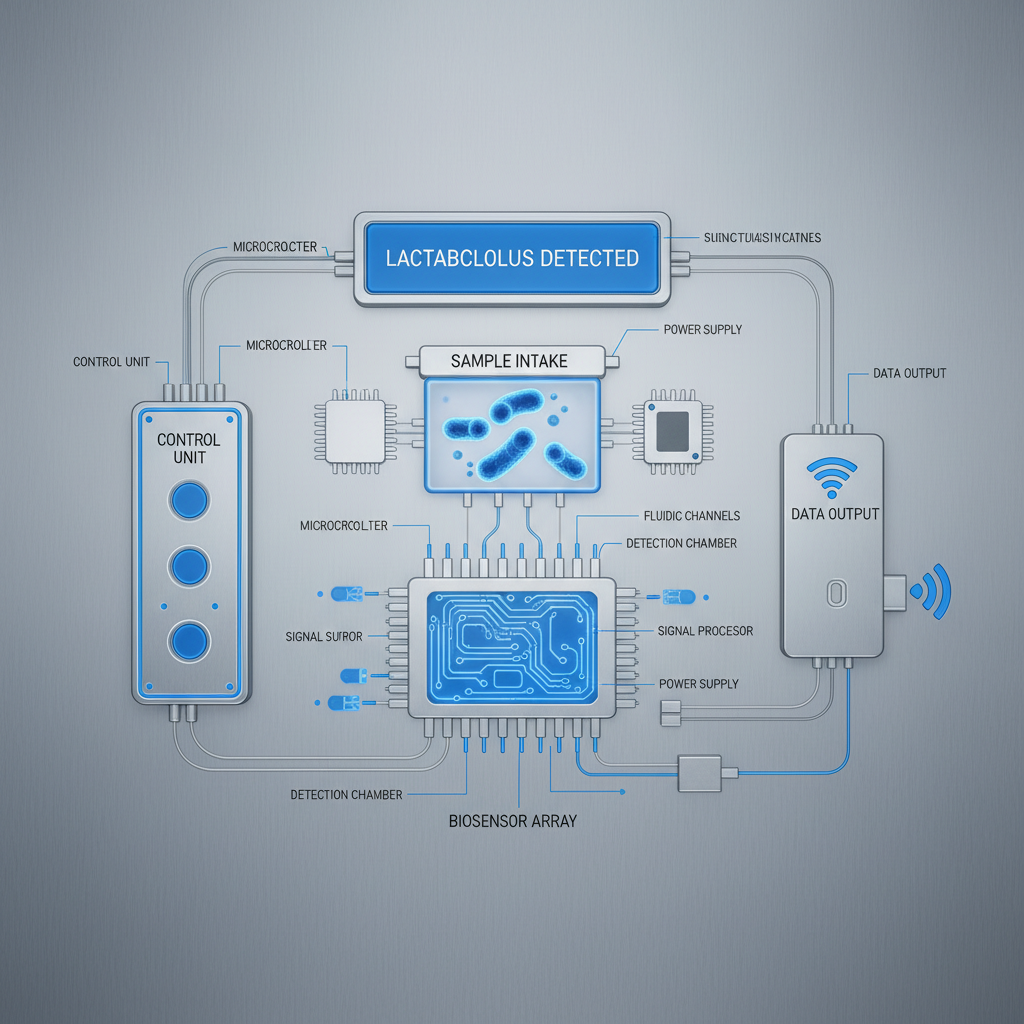
PCR equipment manufacturers specialize in the development of molecular diagnostic tools designed to amplify specific DNA sequences, enabling the rapid identification of pathogens and genetic markers. In the context of environmental biosafety, these manufacturers now integrate PCR technology with bioaerosol sampling to provide real-time monitoring of airborne biological threats.
The challenge for many laboratories and field operators is the gap between sample collection and result generation. Traditional methods often involve transporting samples to a central lab, which introduces delays and risks of contamination. There is a critical need for on-site, rapid testing solutions that combine high-flow aerosol collection with portable PCR amplification.
This article explores the technical landscape of modern PCR equipment, the specific advantages of integrated bioaerosol monitoring systems, and a procurement guide for selecting manufacturers that provide integrated POCT (Point-of-Care Testing) solutions for livestock, pets, and environmental safety.

1The Role of PCR Equipment in Environmental Monitoring

PCR (Polymerase Chain Reaction) equipment serves as the gold standard for nucleic acid amplification, allowing for the detection of minute quantities of viral or bacterial DNA. For manufacturers focusing on biosafety, the integration of PCR with bioaerosol samplers allows for the immediate detection of pathogens in the air, which is vital for early warning systems in farms and laboratories.
By automating the process from nucleic acid extraction to fluorescence detection, these systems provide a seamless workflow. This is particularly critical in the "Medical Diagnosis, Monitoring, and Treatment Equipment" sector, where speed and accuracy directly impact containment strategies during an outbreak.
The transition toward POCT (Point-of-Care Testing) means that equipment is becoming smaller, more energy-efficient, and more rugged, enabling deployment in non-traditional environments like shopping malls, rail transit, and livestock barns.
2Core Technical Features of Advanced PCR Systems
Modern equipment from top pcr equipment manufacturers emphasizes high-flow aerosol collection and fully automated extraction. For instance, a flow rate exceeding 300L/min ensures that a significant volume of ambient air is processed in a short window, increasing the probability of capturing low-concentration pathogens.
Technical specifications such as a sampling time of 5 to 15 minutes and a collection efficiency of D50 < 0.6μm are essential for detecting small viral aerosols. The use of multi-channel fluorescence (FAM, CY5, ROX, HEX) allows for multiplexing, meaning multiple pathogens can be detected in a single test run.
Furthermore, communication capabilities are now integrated via network remote control and data platforms, allowing facility managers to monitor environmental biosafety levels in real-time without being physically present at the sampling site.
3Application Scenarios for Bioaerosol Detection
The application of bioaerosol samplers and portable PCR equipment spans multiple critical sectors. In animal husbandry, these devices are used to detect African Swine Fever or Avian Influenza, preventing catastrophic losses by identifying the virus before clinical symptoms appear in the herd.
In urban environments, the focus shifts to public health safety. Monitoring systems are deployed in airports, stadiums, and offices to detect viral aerosols or mold and fungus, ensuring that ventilation systems are operating correctly and that the air is safe for occupants.
Additionally, veterinary clinics utilize portable PCR for dog and cat health screenings, providing immediate results for zoonotic diseases, which enhances both animal welfare and human safety.
4Analyzing Sampling and Detection Performance
Evaluating the performance of PCR equipment requires looking at the synergy between the sampler and the amplifier. High flow rates are useless if the collection efficiency is low, or if the PCR sensitivity cannot detect the concentrated sample.
Efficiency is typically measured by the particle size distribution it can capture. Systems that achieve high collection efficiency for particles under 1μm are superior for viral detection, as most airborne viruses fall within this size range.
pcr equipment manufacturers Performance Metrics
The data indicates that integrated systems significantly reduce the "time-to-result" compared to traditional lab-based workflows. By performing extraction and amplification on-site, the risk of sample contamination during transport is entirely eliminated.
5Procurement Guide for Portable PCR Systems
When selecting pcr equipment manufacturers, procurement teams should prioritize the "integration level" of the device. A system that handles sampling, extraction, and amplification in one workflow is far more valuable than standalone components that require manual transfer.
Operational constraints must also be considered. Ensure the device operates within your ambient temperature range (typically 5°C to 45°C) and that the consumables are single-use to prevent carry-over contamination between different sampling sites.
Lastly, evaluate the software ecosystem. A manufacturer that provides a data platform for remote monitoring and automated reporting will reduce the labor cost of environmental biosafety management.
6Future Trends in Molecular Diagnostic Hardware
The trend in molecular diagnostics is moving toward "zero-prep" sampling. Future iterations of PCR equipment will likely incorporate more advanced microfluidics, further reducing the need for manual reagent handling and making the process entirely autonomous.
We are also seeing a shift toward CRISPR-based detection integrated into PCR hardware, which could offer even higher specificity and faster results without the need for complex thermal cycling.
As the demand for POCT grows in the pharmaceutical and agricultural industries, manufacturers will focus on reducing the cost per test and increasing the robustness of devices for use in harsh outdoor environments.
7Comparative Analysis of Sampling Technologies
Different sampling methods offer different trade-offs in terms of efficiency and volume. While passive sampling is cheap, it is too slow for emergency detection. Active sampling, specifically wet-cyclone technology, is the current industry preference for PCR-based workflows.
Comparing these technologies helps users decide whether they need a high-throughput monitoring device for a large warehouse or a portable mini PCR unit for field diagnostics.
| Technology | Best Use Case | Main Strength | Primary Limitation |
|---|---|---|---|
| Wet-Cyclone | Pathogen Detection | High Efficiency | Requires Liquid Medium |
| Impaction | Fungal Spores | Direct Plate Growth | Lower Volume |
| Filtration | Long-term Monitoring | Max Particle Capture | Filter Clogging |
| Mini-PCR POCT | Field Testing | Rapid Turnaround | Lower Multiplexing |
| Lab-scale PCR | Deep Research | Extreme Sensitivity | Not Portable |
| Continuous Sampler | Biosafety Alerts | Real-time Data | Higher Power Use |
Ultimately, the choice depends on the target pathogen and the required response time. For those needing an integrated solution for livestock and pets, the combined sampler-PCR approach offered by specialized manufacturers is the most effective.
Frequently Asked Questions
Conclusion
The integration of high-efficiency bioaerosol sampling with portable PCR technology represents a major leap in environmental biosafety. By shifting the diagnostic process from the lab to the field, pcr equipment manufacturers are enabling faster response times and more accurate monitoring of airborne pathogens in diverse settings, from industrial facilities to livestock farms.
For organizations looking to implement a robust POCT solution for pathogen monitoring, evaluating the synergy between flow rate, collection efficiency, and automation is key. Interested parties can explore detailed product specifications and integrated solutions at www.bioaerosolsampler.com.