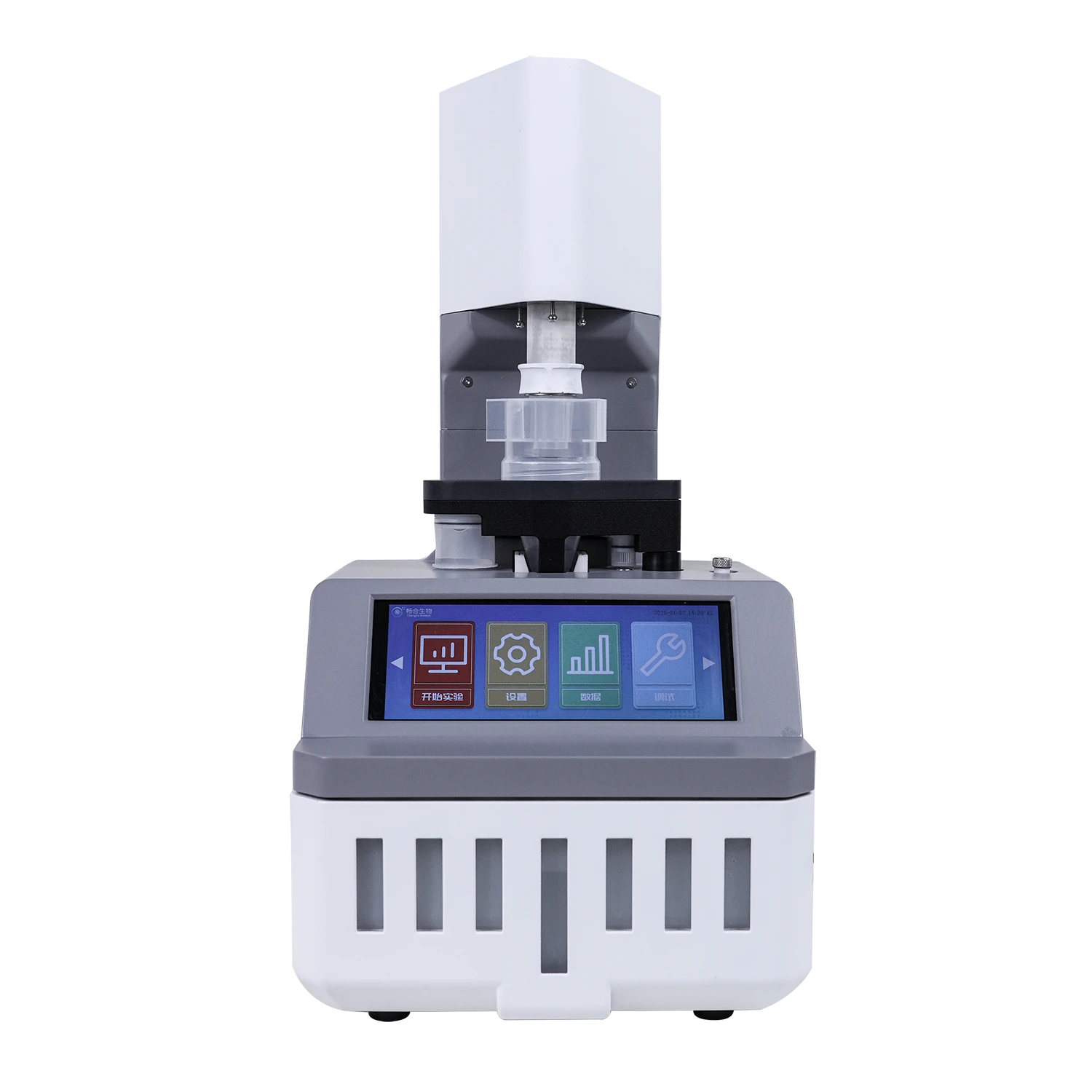

Comprehensive Guide to Field PCR Machines | Portable Molecular Diagnostics
Why the Field PCR Machine Matters in Today’s World
If you’re a bit curious about what a field PCR machine is and why folks from scientists to NGOs keep talking about them, you’re in the right spot. In essence, field PCR machines are portable devices for quickly analyzing DNA or RNA samples right where the action happens — be it a remote village or a bustling quarantine zone. With global health and environmental challenges piling up, having a way to run molecular diagnostics outside traditional labs is more than a convenience; it’s a game changer.
From outbreak containment to environmental monitoring, the need for rapid, on-the-spot testing has never been clearer. And understanding how these machines work, what makes them tick, and who’s putting them to use can help us grasp why they’re becoming indispensable worldwide.
Global Relevance: A Tool Connecting Science and Field Challenges
According to data from the World Health Organization, infectious diseases remain a top threat globally — especially in underserved communities where lab infrastructure is scarce. The field PCR machine addresses this gap by offering quick and reliable detection of pathogens without a full laboratory setup. In fact, countries struggling with outbreaks such as Ebola, Zika, and more recently COVID-19, saw massive benefits from deploying portable PCR technology.
But it’s not just healthcare. Environmental agencies monitor water quality or agricultural researchers identify plant diseases right on site. UN reports consistently highlight how better field diagnostics contribute directly to faster response times and lower transmission rates. Yet, challenges remain, especially with power supply, training, and the initial cost of the units.
Mini Takeaway:
- Field PCR machines help tackle urgent health and environmental issues globally.
- They overcome logistical hurdles where traditional labs don’t exist or aren’t practical.
- The technology is a crucial link in rapid response and monitoring systems worldwide.
What Is a Field PCR Machine?
Put simply, a field PCR machine is a compact, portable device that amplifies specific DNA or RNA to detectable levels, enabling immediate analysis. “PCR” stands for polymerase chain reaction — a technique that makes millions of copies of a gene fragment to pinpoint pathogens or genetic markers.
Modern versions of these machines reduce the complicated, laborious lab process into a user-friendly format that can be operated outside controlled lab environments. Think of it as miniature genetics that fits into a backpack but doesn’t compromise on sensitivity or accuracy. This blend of portability and precision supports urgent testing needs across multiple industries — health, food safety, environmental monitoring, and beyond.
Mini Takeaway:
- A field PCR machine miniaturizes traditional lab PCR equipment for on-site use.
- It allows rapid, accurate detection of DNA/RNA in challenging environments.
- Its use spans health, agriculture, environment, and emergency response sectors.
Key Features That Define a Good Field PCR Machine
Durability
Unlike lab-bound machines, field PCR units need to endure rough handling, temperature extremes, dust, and sometimes even moisture. Military-grade or at least rugged casings are common to protect sensitive internal components.
Power Efficiency and Autonomy
Often, there’s no plug nearby. Many models run on rechargeable batteries and support solar charging – an absolute must for remote areas. Power consumption is optimized for use over several cycles with minimal recharging.
User-Friendly Design
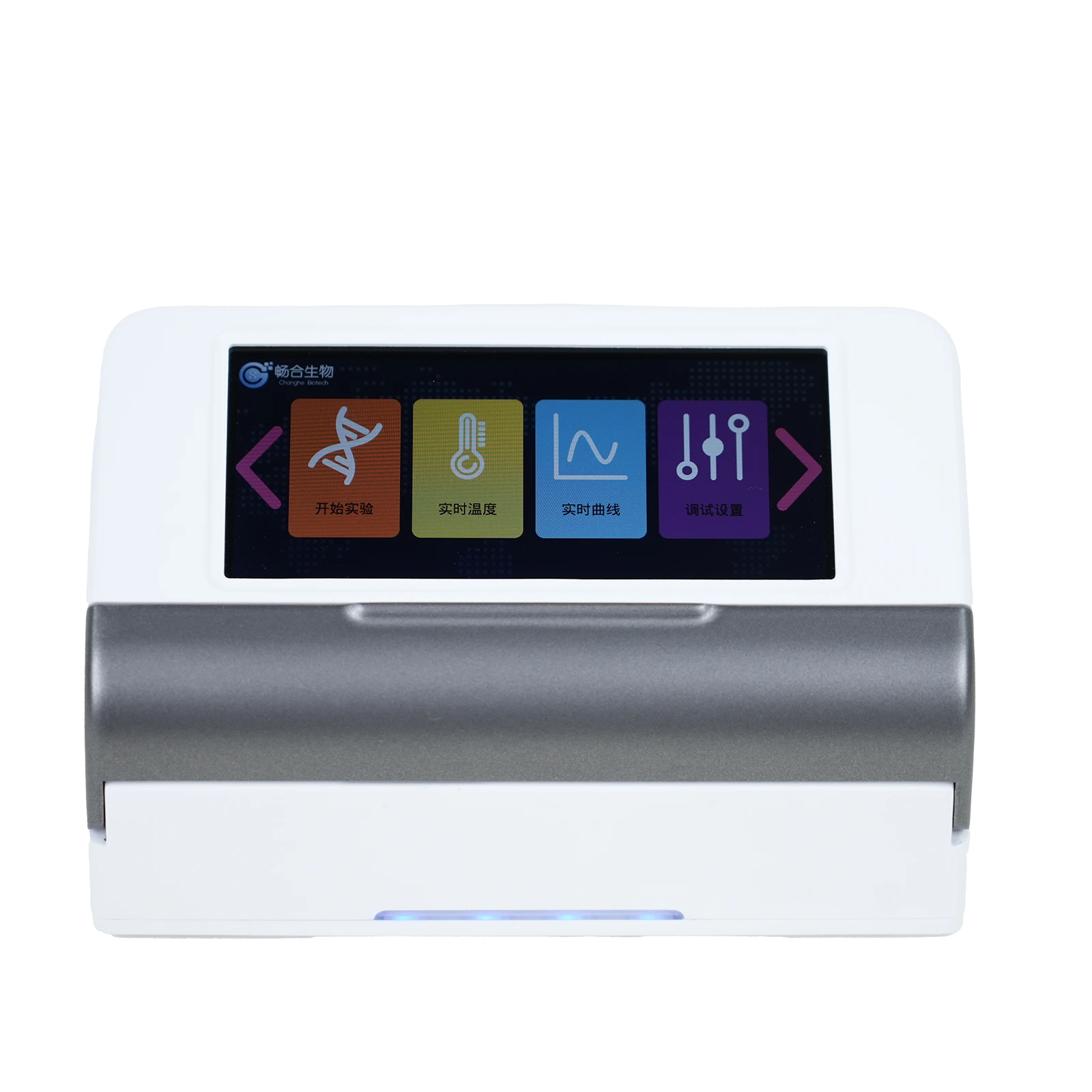
The ideal machine walks a fine line: simple enough for field technicians with limited training but with enough functionality to perform complex PCR protocols. Intuitive touch screens, preprogrammed assays, and automated sample handling contribute here.
Data Connectivity
Uploading results to cloud databases for real-time epidemic tracking or environmental records is increasingly expected. Bluetooth, Wi-Fi, and cellular data options are often built in.
Speed and Scalability
Running tests quickly is important during outbreaks or field surveys. Machines that can handle multiple samples at once without sacrificing accuracy help scale up testing throughput.
Product Specification Table
| Feature | Specification |
|---|---|
| Dimensions | 25cm x 20cm x 12cm |
| Weight | 3.5 kg (7.7 lbs) |
| Power Supply | Rechargeable Li-ion battery (8 hr typical) |
| Temperature Range | -10°C to 50°C operable |
| Throughput | 4–16 samples per run |
| Connectivity | Wi-Fi, Bluetooth, USB, Cellular Module (optional) |
Real-World Uses of Field PCR Machines
Where do these devices shine? Pretty much anywhere that conventional labs don’t exist or time is of the essence.
- Infectious disease outbreaks: Health workers in West Africa employed portable PCR during Ebola to confirm cases quickly.
- Environmental monitoring: Water treatment plants in Europe use them for pathogen detection right at the source.
- Agriculture: Field agents detect crop viruses early, preventing widespread losses in Asia.
- Emergency response: Earthquake or flood zones often set up quick screening stations for waterborne pathogens.
One notable example is a team in remote Amazon regions using field PCR to identify malaria strains within minutes — a feat nearly impossible just a decade ago.
Mini Takeaway:
Whether tracking diseases or safeguarding crops, field PCR machines provide crucial data rapidly and where it’s most needed.
Why Invest in a Field PCR Machine? The Long-Term Advantages
Here's the tough truth: getting lab equipment to remote or resource-poor areas is costly and often impractical. Field PCR machines cut down turnaround times from days or weeks to hours or even less. That means faster treatment decisions and less risk of outbreaks spiraling out of control.
They’re also eco-friendlier in the big picture: less transportation of samples reduces carbon footprints. Plus, empowering local staff boosts community resilience and trust. And frankly, having instant access to reliable results — as opposed to working blindfolded — feels like an enormous relief in crisis situations.
What Does the Future Hold for Portable PCR Devices?
Innovations are already underway, combining miniaturization with AI-driven diagnostics. Imagine a field PCR machine that’s solar-powered, fully automated, and capable of generating actionable reports instantly sent to global health networks.
Material science advances are producing even more rugged casings, while multiplex assays enable detection of multiple pathogens in a single run. Blockchain-secured data sharing is another emerging trend for transparent and tamper-proof health surveillance. Digital transformation is turning field diagnostics into smart, connected components of a worldwide disease early-warning system.
Common Challenges and How Experts Tackle Them
No tech is perfect. Portable PCR machines sometimes struggle with sample contamination, complex sample prep, or battery life in the field. Additionally, training new operators who may not have molecular biology backgrounds is a hurdle.
Top vendors address this by creating modular kits with simplified prep, ruggedized power options like solar chargers, and cloud-based tutorial platforms for remote guidance. Some NGOs partner with universities for ongoing training. It’s a work in progress, but progress nonetheless.
Vendor Comparison at a Glance
| Vendor | Price Range | Portability | Throughput | Notable Feature |
|---|---|---|---|---|
| GeneTech Explor | $12,000 - $15,000 | Ultra-compact (2kg) | 4 samples/run | AI-assisted diagnostics |
| FieldBio Solutions | $18,000 - $21,000 | Ruggedized, weatherproof | 8 samples/run | Solar charging option |
| RapidTest Corp | $9,000 - $13,000 | Compact, backpack-sized | 4 samples/run | Integrated app for results |
Frequently Asked Questions About Field PCR Machines
Q1: How long does it take to get results from a field PCR machine?
Generally, results can be obtained within 30 minutes to 2 hours, depending on the assay type and sample prep. Advances continue shrinking this time frame, allowing near real-time insights in critical situations.
Q2: Are these machines easy to operate without extensive lab training?
Many manufacturers design field PCR devices with user-friendly interfaces, touchscreen prompts, and automated steps. Field operators typically receive brief training sessions to ensure proper use, which can be supplemented by remote support.
Q3: Can field PCR machines detect multiple pathogens simultaneously?
Yes. Modern machines often support multiplex PCR, which means you can detect several target sequences in one run — a huge boost for screening complex samples quickly.
Q4: What are the power requirements in off-grid areas?
Most portable PCR machines run on rechargeable batteries lasting several hours. Solar charging kits or power banks are often included or available as accessories to ensure uninterrupted operation.
Q5: How reliable are results compared to traditional laboratories?
The best field PCR machines undergo rigorous validation and often match lab-based PCR accuracy. However, sample collection and preparation are critical to maintain reliability, so proper protocols must be followed.
To Wrap It Up: Why Field PCR Machines Are Here to Stay
In a world that’s constantly responding to new health threats and environmental challenges, having rapid, flexible, and reliable tools like a field PCR machine feels less optional and more essential every day. From protecting vulnerable communities to supporting frontline scientists, these devices put the power of molecular diagnostics right where it’s needed most.
Interested in learning more or upgrading your own field diagnostics? Why not visit our website: field pcr machine to dive deeper. Better tools make better responses — that’s the promise here.
References
-
Uniplex PCR Equipment for Industrial Biosafety & MonitoringNewsDec.08,2025
-
TB PCR Kit: A Veteran’s Take on Leading Diagnostic ToolsNewsDec.08,2025
-
Stem Loop Rt Pcr – Advanced Molecular Detection Solutions for Industry | Bio Aerosol SamplerNewsDec.08,2025
-
Reliable RT PCR RNA Virus Testing & Bioaerosol Sampling EquipmentNewsDec.07,2025
-
Rt Pcr Monkeypox: Advanced Viral Detection Solutions for B2B IndustriesNewsDec.07,2025
-
RT PCR Kit for Monkeypox Detection – Reliable Diagnostics ToolNewsDec.07,2025