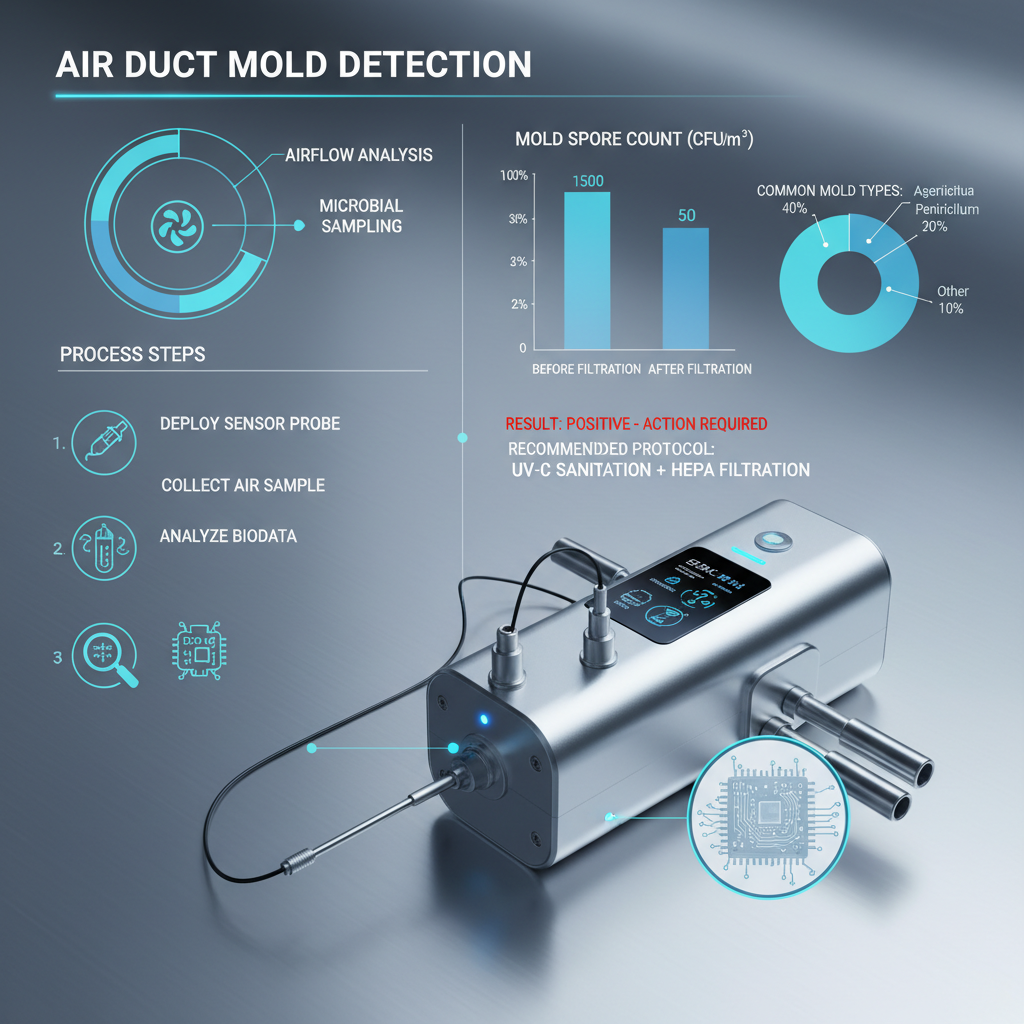
Look, I've been in construction for twenty years. Twenty years of dust, blueprints, and explaining things to folks who think "ventilation" means opening a window. Lately, everyone’s been talking about indoor air quality, and for good reason. Moisture gets trapped in ductwork, and before you know it, you've got a mold problem. It's not just about health—it's about building longevity, project budgets, and frankly, doing things right. That's where a proper test for mold in air ducts comes in. It’s not a luxury; it's foundational to responsible building practices.
I've seen projects stall, budgets balloon, and reputations tarnished because of ignored mold issues. A little proactive testing can save a ton of headache. It’s not glamorous work, but it’s crucial. It’s about protecting the people who use these buildings – schools, hospitals, homes – and making sure they’re breathing clean air. We're moving past just building structures to building healthy environments.
The biggest problem I see is people waiting until there’s a visible problem. By then, you’re not just dealing with mold, you’re dealing with a full-blown remediation project, and nobody wants that. Regular test for mold in air ducts is about preventative maintenance, plain and simple. Think of it like changing the oil in your truck—you do it before it breaks down, not after.
The Importance of Proactive Mold Testing
I've been on sites where they cut corners on ventilation, thinking it's a small detail. It's never a small detail. Ignoring potential mold growth in air ducts is like ignoring a slow leak in a pipe – it will eventually cause major damage. A comprehensive test for mold in air ducts isn’t just about compliance; it’s about building integrity and safeguarding the health of occupants. It’s about responsibility.
We’re seeing stricter regulations all the time, and for good reason. Owners and building managers are realizing that the cost of ignoring these issues far outweighs the cost of preventative testing. It’s a learning curve, but it’s one we need to embrace.
Understanding Mold Growth in Ductwork
Mold needs three things to grow: moisture, a food source (like dust or drywall particles), and the right temperature. Ductwork provides all of those. Condensation builds up, especially in poorly insulated or sealed systems. Leaky ducts pull in humid air from attics or crawl spaces. And once it gets started, it spreads quickly. The biggest culprits I see are around cooling coils and in areas with poor airflow. Test for mold in air ducts helps pinpoint the source and extent of the problem.
You also have to consider the type of ductwork. Flexible ducts are more prone to trapping moisture than rigid metal ducts. The materials themselves can also contribute. Certain coatings or adhesives can provide a better surface for mold to grow on. Knowing your system inside and out is half the battle.
And it’s not just about the ducts themselves. You have to look at the entire HVAC system – the air handler, the filters, even the drain pan. Mold can start anywhere there's standing water or excessive humidity.
Key Factors Influencing Test Results
Several factors can throw off a test for mold in air ducts, so it’s crucial to get it done right. Airflow is huge. If you're not sampling in an area with representative airflow, you're not getting an accurate picture. Testing needs to be done by someone who understands HVAC systems and where mold is likely to accumulate.
The type of sampling method also matters. Surface samples are good for confirming visible mold, but air samples are better for detecting hidden growth. And the lab you use needs to be accredited and reliable. You don't want to waste your money on a test that's going to give you inaccurate results. I’ve seen too many labs cut corners.
Another thing to consider is external factors. Construction activity, nearby demolition, even seasonal changes can influence mold spore counts. You need to take those things into account when interpreting the results. It's not always a straightforward answer.
Comparative Analysis of Testing Methods
There are a few different ways to test for mold in air ducts, and each has its pros and cons. Swab tests are good for surface sampling – you wipe the inside of the duct with a sterile swab and send it to a lab for analysis. But they only tell you what's on the surface, not what's floating in the air.
Air cassette sampling, where you pull air through a filter and analyze the spores, gives you a better idea of the overall mold levels. But it can be affected by airflow and sampling location. Visual inspections are also important, but they're limited by what you can actually see. Often, the problem is hidden behind insulation or in hard-to-reach areas.
Comparative Effectiveness of Test for Mold in Air Ducts Methods
Global Applications in Building Management
We're seeing a push for better indoor air quality standards worldwide. In Europe, there's a big focus on energy efficiency, which often means tighter building envelopes and increased risk of moisture buildup. In the US, schools and hospitals are leading the charge, recognizing the impact of air quality on student performance and patient health. And in developing countries, where building codes may be less stringent, awareness is growing about the importance of preventing mold growth. A solid test for mold in air ducts program is becoming a universal best practice.
I was just in Australia working on a hospital project, and they were incredibly proactive about mold testing. They had a detailed protocol in place, with regular inspections and testing, and a dedicated team to address any issues that arose. It’s a good example of how this should be done.
Long-Term Benefits and Cost Savings
Ignoring mold isn't just a health risk; it's a financial one. Remediation can be incredibly expensive – tearing out drywall, replacing ducts, and disrupting building operations. A small investment in preventative test for mold in air ducts can save you a fortune in the long run. It also protects your reputation – nobody wants to be known for having a building with mold problems.
Beyond the direct cost savings, there are indirect benefits too. Improved air quality leads to fewer sick days, increased productivity, and a healthier learning or working environment. It’s about creating spaces where people can thrive. And let's not forget the potential legal liabilities associated with mold exposure.
Future Trends in Air Quality Assessment
We’re starting to see the use of more advanced technologies for mold detection. Things like real-time monitoring systems that can detect changes in humidity and temperature, and even sensors that can identify specific mold species. Drones are also being used to inspect ductwork in hard-to-reach areas.
I think the future of test for mold in air ducts will be about proactive, predictive maintenance. We'll be able to identify potential problems before they even become visible, and take steps to prevent them from happening in the first place.
And data analytics will play a bigger role. We'll be able to track mold levels over time, identify patterns, and make more informed decisions about ventilation and maintenance. It’s an exciting time to be in this field.
Summary of Key Considerations for Mold Testing
| Testing Method |
Cost Effectiveness |
Detection Capability |
Implementation Complexity |
| Surface Swab Testing |
High |
Moderate |
Low |
| Air Cassette Sampling |
Moderate |
High |
Moderate |
| Visual Inspection |
Very High |
Low |
Low |
| Bulk Sampling |
Moderate |
High |
Moderate |
| Dust Collection & Analysis |
Moderate |
Moderate |
Moderate |
| Real-Time Monitoring Systems |
Low |
Very High |
High |
FAQS
That depends on several factors, including the age of the building, its location, and the climate. As a general rule, I recommend annual inspections, with more frequent testing if you suspect a problem. If you've had a water leak or flooding, you should definitely test immediately. Think of it like preventative maintenance for your HVAC system – a little bit of effort now can save you a lot of trouble later.
A positive result doesn't automatically mean you have a major problem. It just means mold spores were detected. The key is to understand the type of mold and the concentration levels. A qualified professional can help you interpret the results and develop a remediation plan if necessary. Don't panic, but don't ignore it either.
You can find DIY mold testing kits, but I generally recommend hiring a professional. They have the proper training, equipment, and expertise to collect accurate samples and interpret the results correctly. A DIY kit might give you a general idea, but it won’t provide the detailed information you need to make informed decisions.
Remediation involves removing the mold and addressing the source of the moisture. This can range from cleaning and disinfecting affected areas to replacing damaged materials like drywall or ductwork. It’s crucial to follow proper safety procedures to prevent the spread of mold spores during the remediation process. Always use a qualified contractor for this.
The cost varies depending on the size of the building, the number of samples collected, and the lab fees. You can expect to pay anywhere from a few hundred to a few thousand dollars. But remember, the cost of not testing can be much higher if you end up with a full-blown remediation project.
That depends on your insurance policy. Some policies cover mold damage caused by sudden and accidental events like water leaks, but others may not. It’s best to check with your insurance provider to see what’s covered. Be sure to document everything, including the initial damage and the testing and remediation process.
Conclusion
We've covered a lot here. Ultimately, consistent test for mold in air ducts isn’t about being paranoid; it’s about being proactive and responsible. It’s about protecting the health of building occupants, preserving the integrity of your investment, and avoiding costly remediation projects down the line. It’s a fundamental part of good building management, plain and simple.
The industry is evolving, with new technologies and techniques emerging all the time. Stay informed, work with qualified professionals, and prioritize preventative maintenance. Your buildings – and the people inside them – will thank you for it. For more information and to schedule a comprehensive assessment, visit our website: www.bioaerosolsampler.com.